Mobile service across North-Central WV · See coverage area →
Open Today · 5:00AM – 10:00PM · (304) 328-5638
Home / Services
Commercial truck repair services in Morgantown, WV bring tire, brake, air-line, starting, fuel, cooling, and roadside repair support directly to commercial trucks and trailers.
Mountaineer Truck & Tire Repair provides mobile commercial truck and trailer service from Morgantown, WV. Rather than operating as a traditional walk-in repair shop, the service model focuses on reaching trucks at roadside locations, commercial properties, fleet locations, and other accessible work areas when a heavy-duty problem interrupts operations.
Commercial truck repair services in Morgantown, WV cover several distinct systems, so choosing the right service starts with the actual symptom. Tire damage, air loss, excessive brake stroke, weak cranking, fuel starvation, coolant loss, and overheating each follow a different repair path, not one generic roadside response.
When the cause of a breakdown is unclear, broader roadside support can help identify the affected system. When the mechanical problem is already known, mobile repair can focus more directly on the component or system responsible.
Roadside assistance supports commercial trucks and trailers with breakdowns that need on-location triage before you can select tire, starting, fuel, air, cooling, or mechanical service.
Mobile truck repair addresses mechanical and roadside problems that can be evaluated or corrected on-site, without requiring every disabled commercial vehicle to reach a repair shop first.
Commercial tire problems can involve different wheel positions, damage patterns, and replacement decisions. The tire-service group separates tractor, trailer, roadside repair, replacement, and fleet needs so the correct tire path can be selected.
Roadside semi-truck tire repair addresses damaged or unusable tractor tires after the affected wheel position, tire condition, and repairability are established.
Flat tire repair focuses on locating the cause of air loss and determining whether the commercial tire can be safely repaired or needs replacement.
Semi-truck tire replacement is the appropriate path when damage, structural condition, or another tire issue makes continued repair unsuitable.
Trailer tire repair addresses tire failures at trailer wheel positions, including roadside air-loss and damage concerns that can interrupt commercial trailer operation.
Trailer flat tire repair focuses specifically on loss of inflation at a trailer wheel and whether the tire condition supports repair.
Trailer tire replacement provides the next service path when the affected tire cannot reasonably remain in service after inspection of its condition.
Mobile truck tire service brings tire evaluation, repair, or replacement capability to commercial trucks and trailers at accessible roadside or work locations.
On-site fleet tire service supports commercial vehicles at fleet locations where multiple tires or scheduled tire concerns can be handled without individual roadside breakdown calls.
Commercial air systems rely on intact lines, fittings, couplings, and connections to maintain usable air pressure. This service group focuses on air loss and connection failures before they are confused with unrelated mechanical brake problems.
Truck air-line repair addresses leaks, damaged lines, connection problems, and other pneumatic faults affecting the commercial truck or trailer air system.
Air brake line repair focuses specifically on damaged or leaking brake-system air lines that interfere with normal pressure delivery.
Glad hand service addresses damaged seals, couplings, and tractor-trailer air connections that allow air loss or prevent a secure pneumatic connection.
Brake problems can involve air delivery, chamber stroke, friction material, drums, ABS electronics, or inspection findings. The brake-service hierarchy separates these systems so one symptom is not automatically treated as one component failure.
Truck brake service evaluates the broader braking chain when the failed brake component or system has not yet been clearly identified.
Brake pad and shoe replacement focuses on worn, damaged, cracked, contaminated, or otherwise unserviceable friction material at the commercial wheel end.
Brake drum service addresses thermal, structural, and braking-surface concerns when the drum itself becomes the relevant part of the brake problem.
Air brake adjustment evaluates applied pushrod stroke, brake-chamber limits, slack-adjuster condition, and foundation-brake factors that can produce excessive stroke.
DOT brake inspection support helps commercial operators work through brake findings involving stroke, friction components, drums, ABS, air systems, or related compliance concerns.
ABS diagnostics follow warning-lamp behavior, wheel-speed signals, tone rings, wiring, connectors, and electronic fault evidence before treating an ABS component as failed.
A truck that will not start can have low available battery power, an actual failed battery, a starter-circuit problem, or a completely different no-start condition. These services separate immediate cranking support from battery replacement.
Truck jumpstart service provides external starting power when available battery energy is insufficient and uses the cranking response to determine whether another repair may be needed.
Truck battery replacement focuses on confirmed battery failure, starting-bank condition, battery testing, fitment, terminal configuration, and the proper replacement for the commercial application.
Fuel-related roadside calls need one important distinction: diesel powers the engine, while DEF belongs to the emissions aftertreatment system. These services address separate tanks and separate operating problems.
Emergency diesel delivery restores usable fuel when a commercial truck runs out, separating simple refueling from a run-dry condition that may complicate restart.
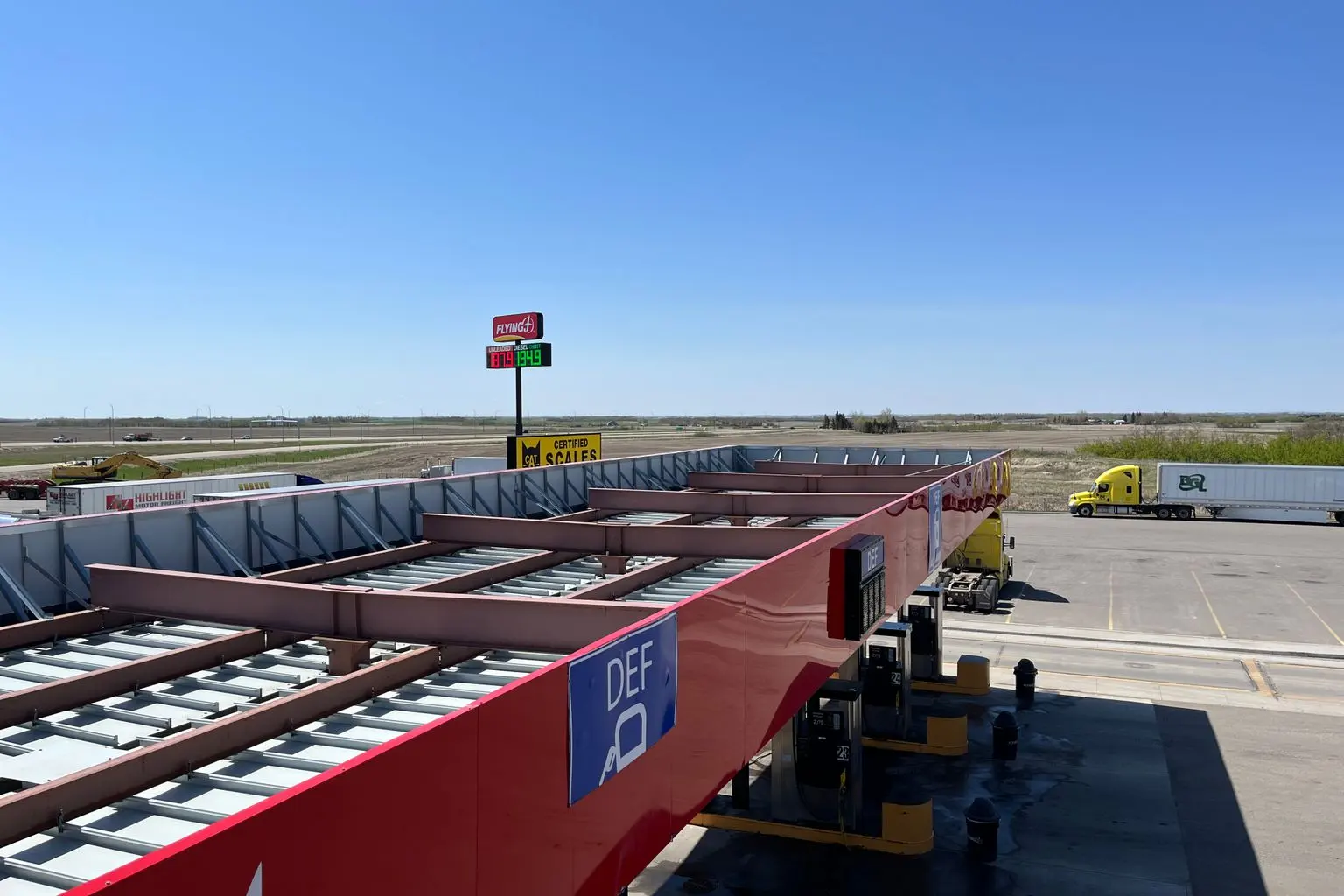
DEF delivery addresses low diesel exhaust fluid when the aftertreatment system needs the correct fluid, not engine fuel or mechanical cooling service.
High engine temperature can come from coolant loss, damaged hoses, restricted circulation, airflow problems, temperature-control faults, or another mechanical condition. Cooling services are separated by what is actually happening in the system.
Truck cooling-system repair evaluates coolant containment, circulation, heat rejection, and temperature regulation when the failed cooling function is unknown.
Coolant leak repair focuses on where coolant is escaping, when the loss occurs, and whether the evidence points to an external or deeper internal problem.
Radiator and coolant hose repair addresses cracked, swollen, leaking, chafed, or poorly sealed hoses and connections within the commercial truck cooling circuit.
Truck overheating diagnosis uses temperature patterns, coolant quantity, circulation, radiator airflow, and temperature readings to narrow down why engine temperature is rising.
Roadside and mobile services extend from Morgantown into surrounding West Virginia communities and selected nearby Pennsylvania areas. Exact availability depends on the truck location, service required, road access, and conditions at the work site.
Commercial operators can provide the nearest city, highway, exit, mile marker, business, or landmark when requesting service. For interstate calls, include the direction of travel whenever possible.